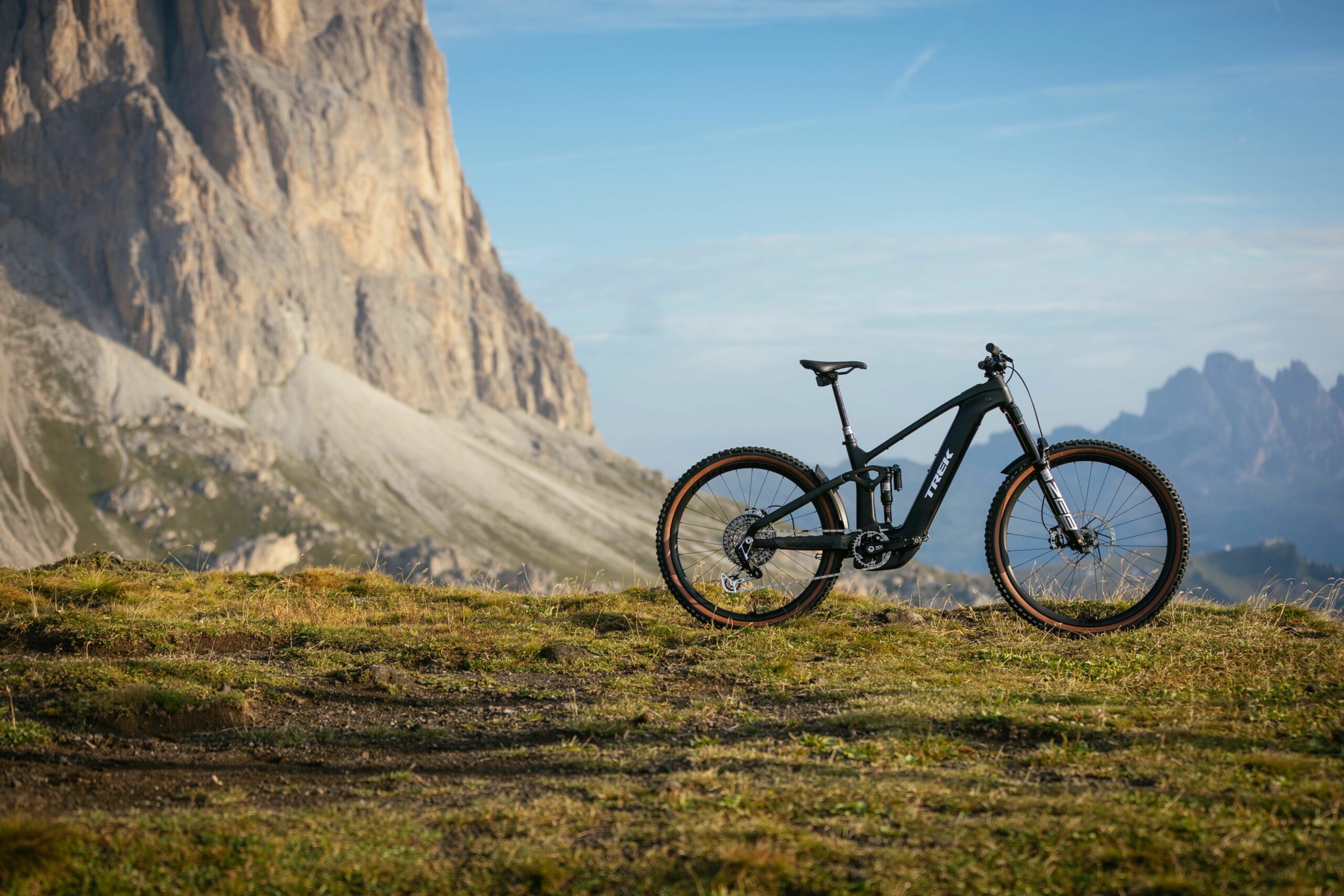
If you’re looking to purchase your first E-MTB, you might be wondering which motor system is going to best suit your needs. And while all the current, trusted brands can offer you a solid e-experience, there are a few differences that you might want to consider. First up, let’s go through some essential terminology and a breakdown of the rules and safety suggestions for e-bikes in the UK!
What Counts as a Legal E-Bike in the UK?
In the UK, a legal electric bike (also known as an EAPC – Electrically Assisted Pedal Cycle) must only provide assistance while you’re pedalling, and that assistance must cut out once you reach a speed of 15.5mph (25km/h).
The important point is that the motor helps you while you pedal – it doesn’t replace the need to pedal. If an e-bike can accelerate or maintain speed without pedalling (like a throttle-powered vehicle), it’s classed as an illegal e-bike under UK law.
E-bike laws differ from country to country. For example, in the USA, the assisted speed limit is higher – often up to 20mph (32km/h). But in the UK and Europe, the legal limit remains at 15.5mph, and this is the same for on or off-road focused bikes.
Are E-Bike Batteries a Fire Risk?
You may have seen news stories about e-bike fires, but it’s important to understand the context. Most of these incidents involve imported conversion kits or aftermarket batteries and components that don’t meet the UK’s rigorous safety and testing standards.
Batteries from reputable e-bike brands are extremely safe. They undergo extensive testing and are built with multiple layers of protection to minimise the risk of overheating or fire. When used correctly, the risk is very low.
To stay safe:
- Always follow the manufacturer’s instructions for charging and storing your battery.
- Only use genuine parts and accessories.
- Have your e-bike serviced or repaired by authorised professionals.
As long as you’re using your e-bike as intended and sticking with approved parts and servicing, there’s no need to worry.
For more advice, we’d recommend you check out the e-bike positive website: https://ebikepositive.co.uk/
As an e-bike positive retailer, we have signed the pledge to commit to the following best practice:
- To sell only road legal e-bikes which are safety-tested and from trusted suppliers, and which come with full safety information and user instructions.
- To repair only road legal e-bikes.
- To repair or modify e-bikes only in accordance with the manufacturer’s instructions.
- To ensure that after any repair or modification, the e-bike can be charged and used safely. If this cannot be guaranteed, to refuse to do the work.
- To supply only safety-tested chargers and batteries from trusted suppliers.
- To supply only chargers, batteries and other components which are documented to be compatible with each other, and with the e-bike where they will be used.
- To supply chargers and/or batteries with full safety information and user instructions.
E-Bike Terminology:
Newton Meters (Nm) – Torque
What it means: Torque is the turning force the motor applies to the bike’s crank.
Why it matters: More torque = better help when climbing hills or accelerating.
Think of it like this: It’s how much “push” the motor gives your legs when you pedal.
Typical range: eMTBs usually have between 50–100 Nm of torque.
Watts (W) – Power Output
What it means: Watts measure how much power the motor delivers.
Why it matters: Higher watts = more assistance when riding fast or uphill.
- Continuous power: what the motor can sustain over time.
- Peak power: the short bursts for quick acceleration or steep climbs.
Think of it like this: Watts are the motor’s “strength” in action.
Watt Hours (Wh) – Battery Capacity
What it means: Wh tells you how much energy the battery can store.
Why it matters: More Wh = longer rides before you need to recharge.
Think of it like this: It’s the size of your fuel tank.
Example: a 500 Wh battery can deliver 500 watts for 1 hour (or 250 watts for 2 hours).
Typical E-MTB batteries: Range from 500 Wh to 800 Wh — some even more with range extenders. Some lightweight e-bikes have smaller batteries to make the overall weight of the bike lighter and provide a more natural/unassisted ride feel.
Full Power vs. Lightweight E-MTB’s – Which is best?:
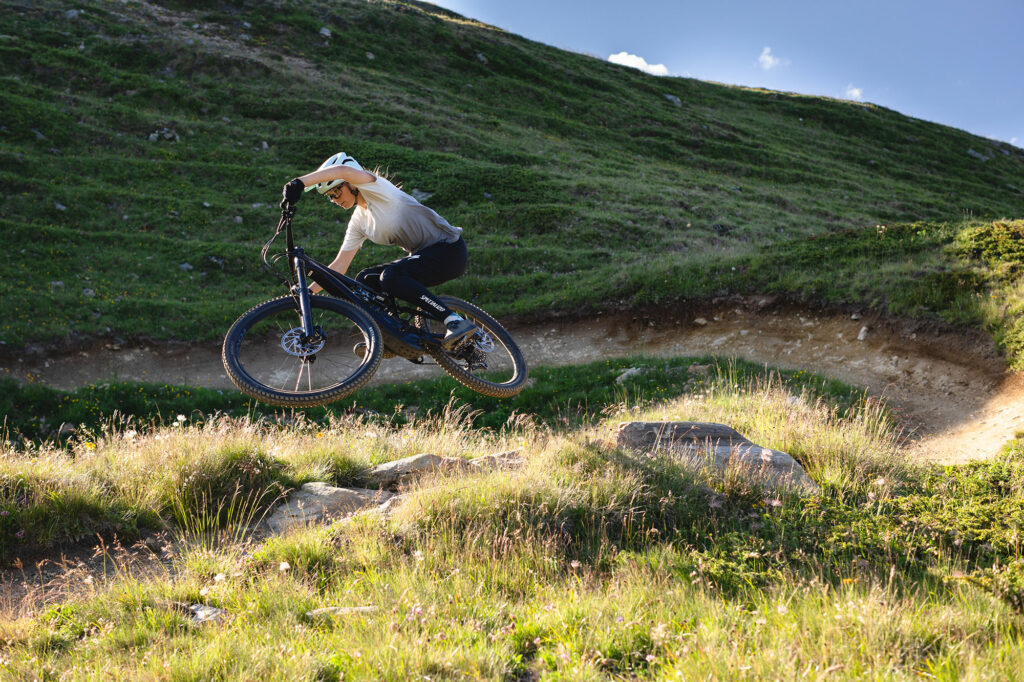
When choosing an E-MTB, you may find yourself torn between a lightweight model or something with a bigger battery/more power. There are various pros & cons to both, but to summarise:
Lightweight E-MTB:
- The lighter weight usually means the bike feels more like a non-electric bike. This means they can feel more nimble, and easier to throw around.
- The downside is they usually come with less power, and smaller batteries. So if you’re riding in the upper power modes you’ll find yourself running out of battery faster than your friends who are on full power bikes.
Full Power E-MTB:
- Bigger battery = more miles and longer rides. The assistance is also generally higher, making technical/steep climbs much easier.
- Full power E-MTB are usually heavier than their SL counterparts, meaning they can feel slightly harder to manoeuvre and less playful. The flip side of this is that the extra weight down low makes them feel extremely stable, which is a big plus for some.
For a deeper dive into this topic, please check out this article: https://www.balfesbikes.co.uk/blog/full-fat-vs-lightweight-e-mtbs-which-should-you-choose/
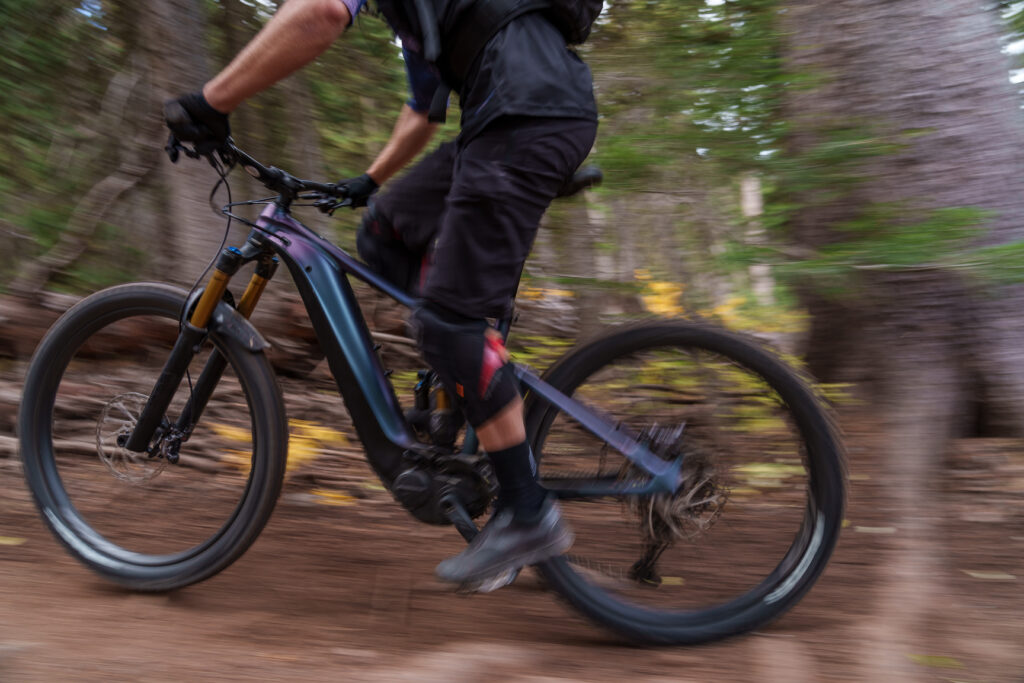
Which E-Bike System Should I choose?
So let’s get to it – which E-MTB system should you choose. We’ll break down some of the main points on the key systems that our brands use, but we’d advise you to also consider the bike as a whole – taking into account the geometry, components and riding style that serves you best. The e-system is only one piece of the puzzle!
We’ve highlighted 4 e-bike systems that you’ll commonly find in our key brands below.
Popular E-MTB Systems:
- Bosch Performance Line CX (Gen 5)
- Specialized 3.1 – Equipped on the new Turbo Levo 4
- Giant SyncDrive Pro 2
- TQ HPR60
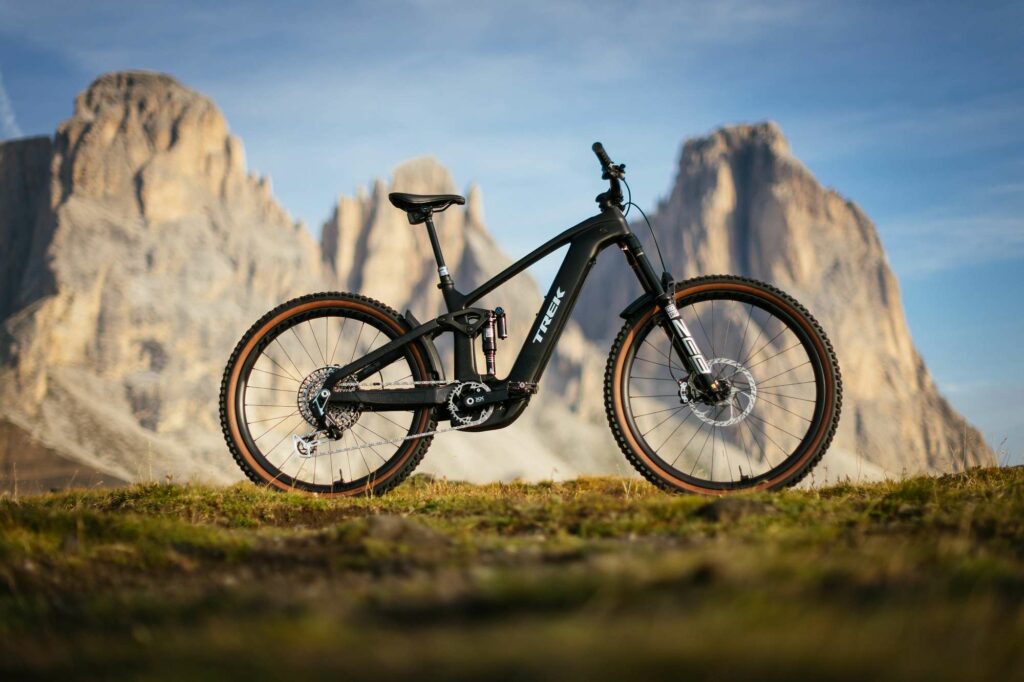
Bosch Performance Line CX (Gen 5)
Performance and Power:
Torque: 85Nm (100Nm with recent update)
Peak Power: 600W (750Nm with recent update)
Support: Up to 340% of rider input (400% with recent update)
Motor Weight: 2.9kg
This is Bosch’s latest e-bike motor system. You’ll find the Performance Line CX system on bikes like the Trek Rail+, offering you maximum power output, allowing you to get to the top of the trails at record pace.
The Performance Line CX motor was originally released offering 85Nm of torque and 600 watts of power, but as of July 2025 an update will allow you to unlock an additional 15Nm of torque and take the peak power up to 750w. This also increases the max support factor to 400%.
Bosch advise that they still supply the system with the performance values of 85Nm, 600 watts and 340% support as standard, as they feel these values represent the ideal balance between performance and riding fun vs wear and range. But the update is easily accessible for those who would like to give their bike that extra boost.
Battery Options:
Powertube 600Wh
Powertube 800Wh
Also compatible with Bosch Powermore 250wh Range Extender
The Bosch Performance Line CX system is compatible with either an 800Wh or 600Wh battery, giving riders the option to reduce the weight of their ride. The 600Wh battery is nearly 900g lighter than its 800wh sibling, enabling you to find the right balance between overall weight and range.
For riders who really want to get the most miles out of the bike, the system is also compatible with a 250Wh range extender, which can be easily mounted in the water bottle holder.
Enhanced Ride Feel:
The Performance Line CX is the most responsive Bosch system to date, thanks to improvements made to the sensor signals. The drive unit offers a responsive, controlled and direct riding experience, and a more natural ride feel.
They have also been able to reduce the noise generated by the gearbox, striking a balance between power delivery and range.
Jumping on a Bosch Performance Line CX equipped bike you can feel the motor delivers its power smoothly, making it simple to tackle technical climbs and providing a great level of uphill flow.
The Bosch Smart System:
The Bosch Smart System leads you into a digital future and allows you to customise your ride, your way. The ebike flow app and all components including the drive unit, battery and display are fully networked and you can transfer updates over the air. This means your ebike will remain up to date after its purchase, and you don’t have to make a trip to the bike shop to run your updates.
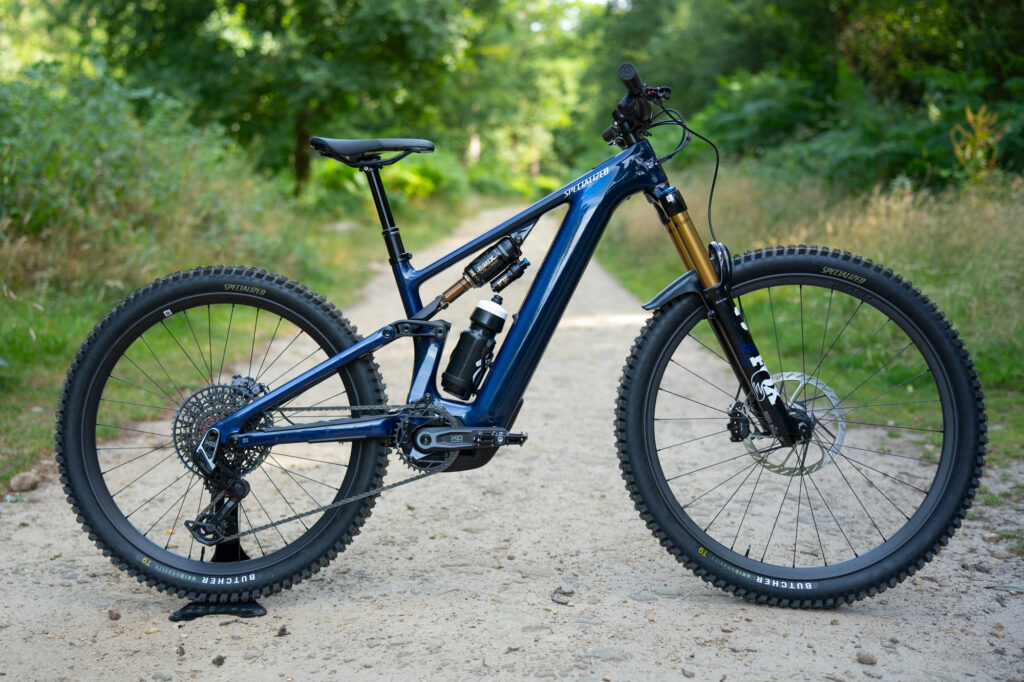
Specialized 3.1 – Equipped on the new Turbo Levo 4
Performance and Power:
Torque: 101Nm (or 111Nm on the S-Works Turbo Levo 4 only)
Peak Power: 666W (720w on S-Works only)
Battery: 840Wh
Motor Weight: 3.15kg
With the release of the Specialized Turbo Levo 4 came the unveiling of the Specialized 3.1 Motor, featuring significant power upgrades vs the previous generation. Specialized have saved the maximum output for their S-Works model, but the standard bikes still pack more of a punch than their older siblings.
With new “Auto” mode, plus dynamic micro tune, Specialized’s latest entry to the E-MTB market is more customizable than ever.
Battery Options:
All Specialized Turbo Levo 4 come with a massive 840Wh battery, and are compatible with a 280Wh range extender, providing you with up to 1,120Wh of range. For riders who want to bring the weight of their bike down, a 600Wh battery will be available soon.
Micro Tune & Dynamic Micro Tune:
Adjust your power/support in 10% increments – because sometimes turbo mode is too much, and trail mode isn’t enough. Dynamic micro tune is similar to standard micro tune but with on-demand full-power assist. This allows riders to cruise efficiently at a lower support level, but when you pedal hard it instantly jumps to 100% support when you need it.
Apply “Find My” Compatibility:
Sync your bike’s onboard computer with your iPhone and track your bike using the Find My app for peace of mind. The 3.1 system also benefits from Turbo System Lock, allowing you to disable your bike’s motor and make it impossible to turn on without your phone connected to the Specialized app or your personal pin – a fantastic theft deterrent!
Other Specialized Systems
Specialized also offer a lightweight E-MTB system (Specialized 1.2 SL), equipped on their Turbo Levo SL bikes. This system offers 50Nm and 320W and is paired with a 320Wh battery (compatible with a 160Wh range extender that provides an additional 50% range). If you’re looking for a lighter bike that feels more like riding your analogue E-MTB with some assistance, this could be the system for you.
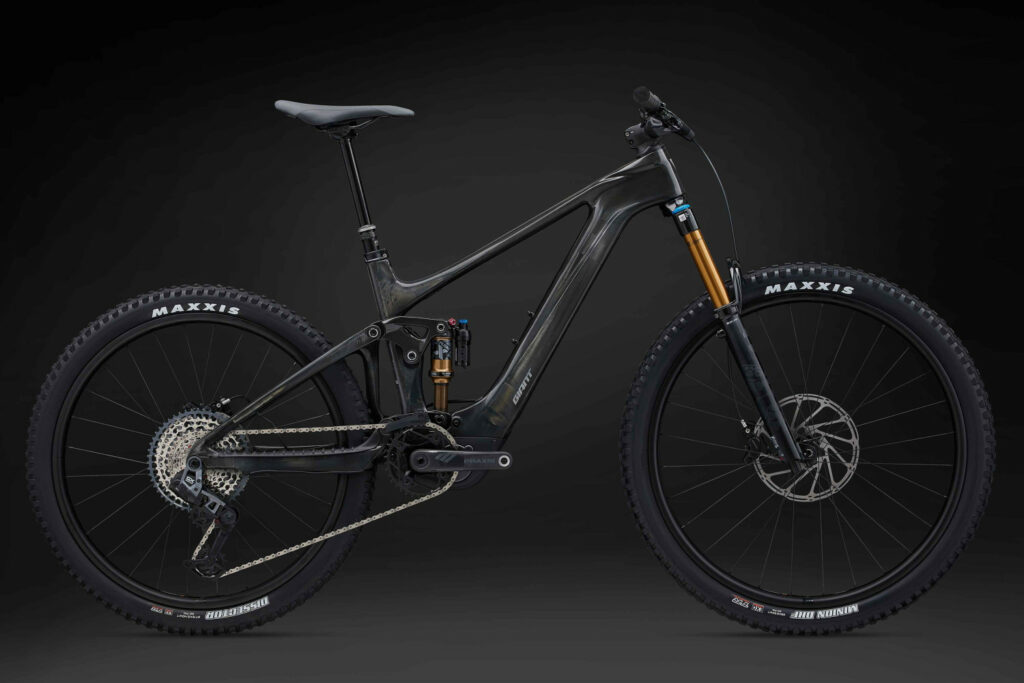
Giant Syncdrive Pro2
Performance and Power:
Torque: 85Nm
Peak Power: 600W
Support: 400% of rider input
Motor Weight: 2.7kg
Giant’s SyncDrive Pro 2 motor was developed in collaboration with Yamaha and optimised for Giant & Liv e-bikes, such as the Trance X Advanced E+, or Liv Intrigue X Advanced E+. The motor is relatively light vs. some of its competitors. SyncDrive Pro 2’s Giant integration gives you an extra 37mm of bottom bracket clearance, without affecting the Q-Factor (A high Q-factor can put strain on your knees and make the riding experience feel less natural). Giant ebikes with the SyncDrive Pro motors offer the same Q-factor as conventional bikes.
Battery Options:
Bikes equipped with the SyncDrive Pro 2 system come with 2 battery options, depending on the model:
Giant EnergyPak 800Wh (Generally compatible with 250Wh EnergyPak Plus Range Extender)
Giant EnergyPak 400Wh (Generally compatible with 200Wh EnergyPak Plus Range Extender)
Smart Assist:
Forget about switching modes while riding – SyncDrive Pro’s smart assist uses 6 sensors (including incline and acceleration) and advanced algorithms to determine the optimum power a rider needs for the terrain. Think of it like an auto gearbox on a car – providing the appropriate support automatically.
Smart Assist mode also maximises efficiency by not using unnecessary energy, allowing you to make the most of your battery.
Ride Control App:
Giant have updated their RideControl App with an improved user interface. New features include customizable data fields and automatic uploads to Strava. You can adjust your SyncDrive Pro 2 Motor in-app, allowing you to tune the support levels and set up your remotes exactly how you like. You can also choose which data is shown on your display.
TQ HPR60
Performance and Power:
Torque: 60Nm
Peak Power: 350W
Support: 200%
Motor Weight: 1.92kg
The HPR60 is the follow-up to TQ’s popular HPR50 system. It was developed to offer an optimal power-to-weight ratio and maximum efficiency, instead of just maximum power.
The HPR60 provides intelligent and measured support that offers an active riding experience, and supports you just enough so that you’re still riding yourself and not being shuttled by the motor.
This is a brand new system from TQ, that you’ll see appearing on various new season lightweight e-bikes.
Harmonic Pin-Ring Technology:
HPR is different from the traditional gear systems used in most e-bike motors – instead of using a conventional drive system that uses numerous gears, with only a few teeth engaged at any one time, the HPR system uses a double tooth ring in which many teeth engage simultaneously. This means more force can be transferred to fewer parts with no loss of power. Essentially, this allows TQ to create a smaller, quieter and lighter motor, as well as providing a natural feeling ride experience.
Battery Options:
There are a number of different batteries compatible with the HPR60, but in E-MTB’s utilising this system you are most likely to find the largest option – 580Wh.
With capacity for a larger battery in a lightweight system, the HPR60 is slowly bridging the divide between lightweight and full power E-MTB’s. An overall lighter bike with a 580Wh battery is getting you much closer to a long range E-MTB with the playfulness and manoeuvrability of a full power bike.
Other TQ systems
HPR50 (50Nm, 250W Continuous, 300W Peak Power). Commonly equipped with a 360Wh battery, as found on the 2025 Trek Fuel EXe or 580Wh battery on the 2025 Slash+
So which E-MTB system is right for you?
The answer is, it depends. If you’re looking for maximum power and range, then perhaps the Bosch or Specialized 3.1 systems are for you. If you’re looking for a lighter bike that handles more like your non-electric MTB, then perhaps the TQ system is worth a look.
Ultimately, as always, it comes down to your individual preferences.
Whichever system you go for, we’re sure you’ll have a blast.
If you do need further advice, please reach out to your local Balfe’s store or our Customer Support Team who would be happy to help.