Everything you need to know about how to choose the right cycling helmet for comfort, safety, and performance.
Expert Tips on How to Choose the Right Cycling Helmet
No two helmets are the same. If you’ve ever wondered how to choose the right cycling helmet, the answer often comes down to fit, comfort, safety, and personal preference. What fits your mate perfectly might slide all over your head. Fit is incredibly individual; the shape, padding, and retention system all make a big difference.
Fit: The Most Important Factor
When learning how to choose the right cycling helmet, fit should always be your starting point.
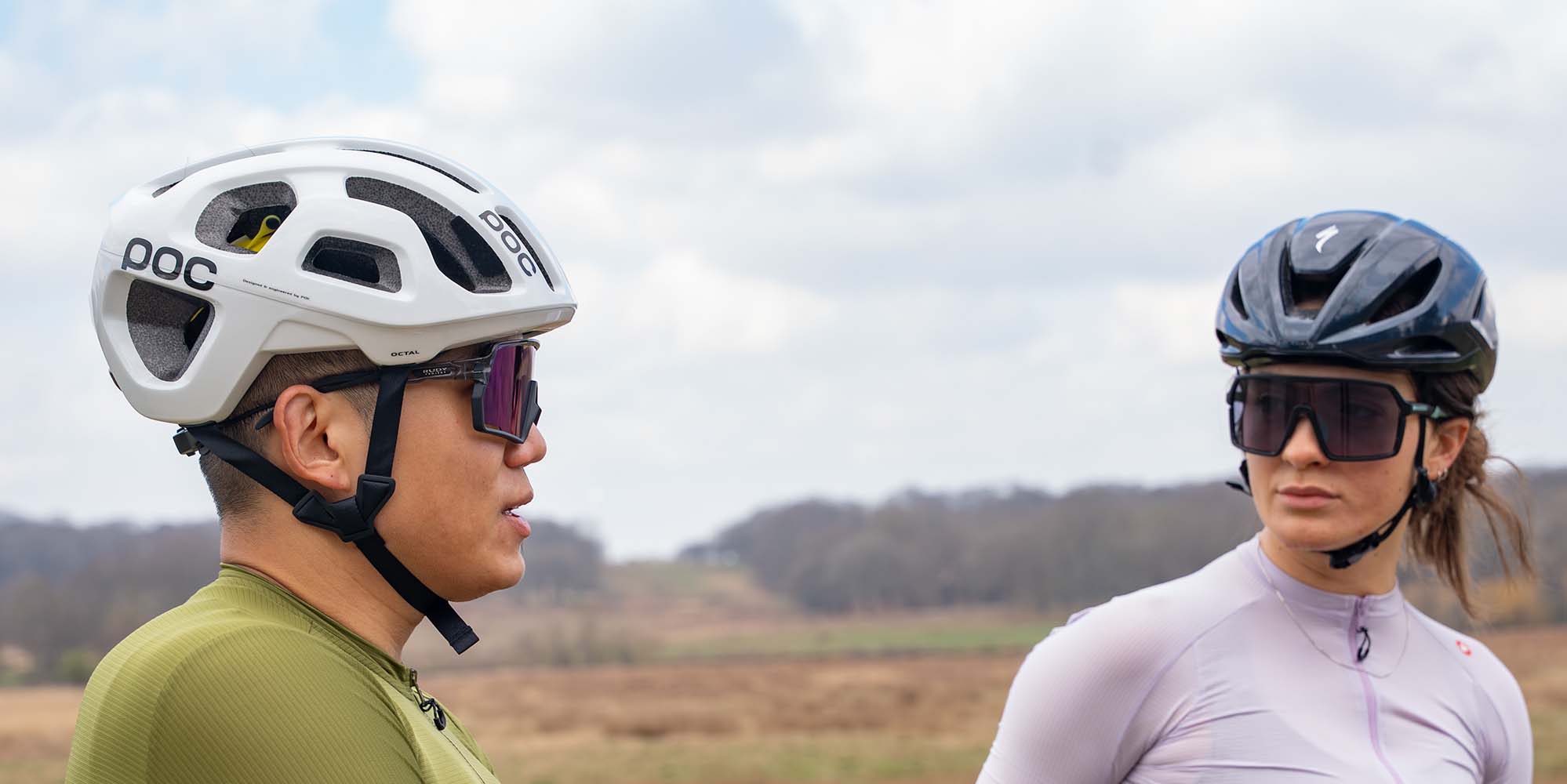
Different brands suit different head shapes. For example, I have quite a round head and find MET helmets fit me best. Specialized ones give me headaches, and Trek helmets move around slightly.
That said, I still use the Trek Ballista for racing. It doesn’t fit perfectly, but in my position on the bike it’s the fastest, at least according to my own bit of pseudo-science. It’s a good reminder that fit and performance don’t always align.
If you can, always try before you buy. Even a few millimetres can make a big difference in comfort when figuring out how to choose the right cycling helmet for your riding style.
Another thing to consider is how a helmet actually looks once it’s on. Some riders find certain helmets make their head look unusually tall or wide, often called the “mushroom effect.” It’s not a sign of poor fit, just a reflection of how a particular helmet shape sits on your head.
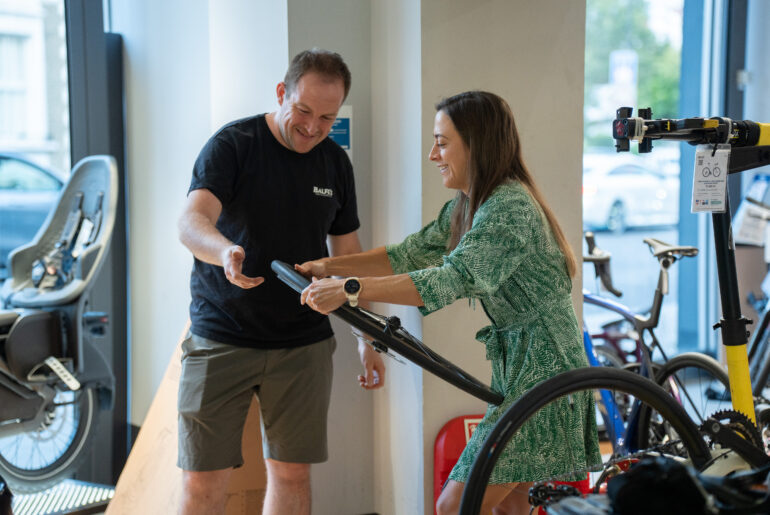
Everyone’s head shape and proportions are different, so one model can look perfectly balanced on one person but oversized on another. That’s why we always recommend heading to your local Balfe’s Bikes to try on a few different helmets in person. You’ll quickly see which brands and shapes suit you best in both comfort and appearance.
Retention Systems
The retention system keeps your helmet snug and stable, an important factor when deciding how to choose the right cycling helmet. It’s a personal thing; some prefer wider systems that spread pressure, while others like a minimal dial.
Many premium helmets use the BOA fit system, known for its precise micro-adjustment, lightweight design, and even pressure distribution. One major advantage of BOA is its lifetime warranty, if a dial ever breaks or wears out, you can request a free replacement directly from BOA, and the fix takes only a few minutes with basic tools.
Other brands have their own mechanisms, such as Specialized’s Mindset 360, KASK’s Octo Fit, or MET’s Safe-T — all aiming to provide a comfortable, secure, and easily adjustable fit while riding.
Safety Standards and Technology
When learning how to choose the right cycling helmet, safety is just as important as fit.
Every helmet sold in the UK or Europe must meet EN 1078, meaning it’s passed impact and strap-strength tests. That’s the legal baseline.
However, real crashes often involve angled impacts, not just straight ones, and that’s where newer technologies come in.
- MIPS adds a low-friction liner that allows slight movement on impact, helping reduce rotational forces on the brain.
- Lazer KinetiCore builds protection zones into the shell itself. It’s lighter, cooler, and has earned 5-star safety ratings in independent tests.
- Other systems like Giro’s Spherical, KASK’s WG11, and Bontrager WaveCel all work towards the same goal, managing both linear and rotational impacts.
Independent Testing: Virginia Tech
Understanding how to choose the right cycling helmet also means knowing which models perform best in independent safety tests.
Virginia Tech’s Helmet Lab runs the most trusted independent tests in the world. Helmets are dropped at multiple angles and speeds to measure both direct and rotational impact forces.
Each helmet gets a STAR score, estimating concussion risk, the lower the number, the better. They’re then ranked from 1 to 5 stars, with 5 stars offering the best protection.
If you see a helmet with a 4- or 5-star Virginia Tech rating, it’s proven to perform better than the legal minimum in real-world-style impacts.
Ventilation and Aerodynamics
Another key part of how to choose the right cycling helmet is deciding whether you prefer ventilation or aerodynamics.
Vented helmets are packed with large air channels that keep you cool on long climbs or hot summer rides. They’re ideal for training, endurance rides, and general comfort.
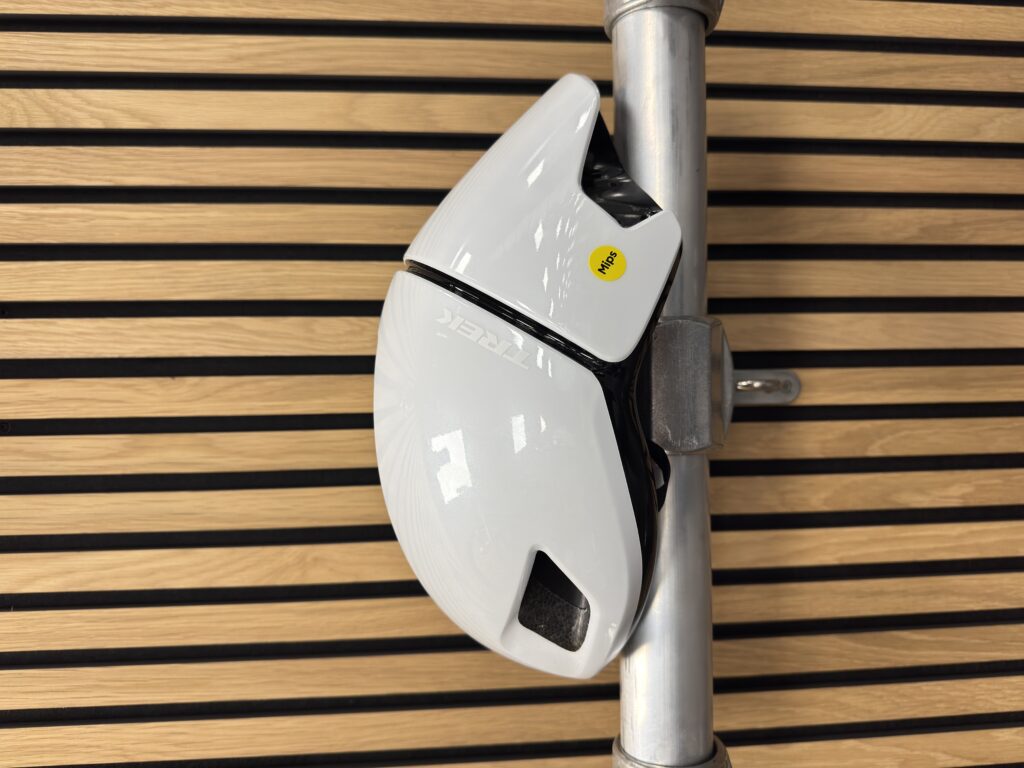
Aero helmets, like the Trek Ballista, trade some airflow for a sleeker, faster shape that reduces drag. For racing or fast group rides, those few saved watts can make a real difference. But there’s another benefit that’s often overlooked, aero helmets tend to be much warmer in winter. With fewer vents and less airflow, they trap heat better, making cold-weather rides noticeably more comfortable.
Modern designs often blend both worlds: semi-aero helmets that manage airflow efficiently without overheating. It’s worth thinking about the conditions you ride in most, hot, hilly days call for more ventilation, while colder or faster rides suit an aero lid.
If you’re interested in the science behind how helmet shape, size, and rider position affect drag, check out our Advanced Aerodynamics Guide, it dives deeper into how aerodynamics really work in cycling helmets.
When Should You Replace Your Helmet?
Even the best helmets don’t last forever. Learning how to choose the right cycling helmet also means understanding when it’s time to replace it.
Most manufacturers recommend replacing your helmet every three to five years, but there are a few reasons why that’s important.
Over time, exposure to UV light, sweat, and temperature changes can cause the foam and plastic shell to degrade. These materials gradually lose their ability to absorb impact effectively, even if they still look fine from the outside.
If you’ve ever been involved in a crash or dropped your helmet hard, it should be replaced immediately. EPS foam (the material that absorbs impact) is designed for one-time use, once it’s compressed, it can’t protect you properly again.
The straps and retention system can also wear out over time, especially if you ride regularly in all weather. Sweat and sun can weaken the materials, making them less reliable in a crash.
A good rule of thumb: if your helmet feels loose, the padding is falling apart, or it’s more than five years old, it’s probably time for a new one. When in doubt, bring it into Balfe’s Bikes, the team can help you assess its condition and recommend a safe replacement.
Frequently Asked Questions
In the UK and Europe, always look for EN 1078 certification. This ensures the helmet has passed rigorous impact and retention tests. In the US, the equivalent is the CPSC standard.
A properly fitted helmet should sit level on your head — about two finger-widths above your eyebrows — and feel snug without pressure points. When you shake your head, it shouldn’t move around. Adjust the retention system and chin straps so the helmet feels secure but comfortable.
MIPS stands for Multi-Directional Impact Protection System. It’s a low-friction liner inside the helmet that allows a small amount of movement on impact, helping to reduce rotational forces that can cause brain injury.
The BOA dial offers precise, one-handed adjustment and an even fit around the head. It also comes with a lifetime warranty — if it ever breaks, BOA will send a free replacement that’s quick and easy to install.
Not necessarily. All helmets must meet the same basic safety standard. Higher-priced models usually offer better ventilation, lower weight, improved comfort, and advanced technologies like MIPS or KinetiCore, but even affordable helmets can be very safe if they fit correctly.
Independent tests, like those from Virginia Tech, measure both linear and rotational impact protection. These real-world tests provide more insight than basic certification alone, helping riders compare helmets more accurately.
Vented helmets prioritise cooling and airflow, while aero helmets reduce drag for higher speed efficiency. Aero helmets are also naturally warmer in winter due to reduced ventilation.