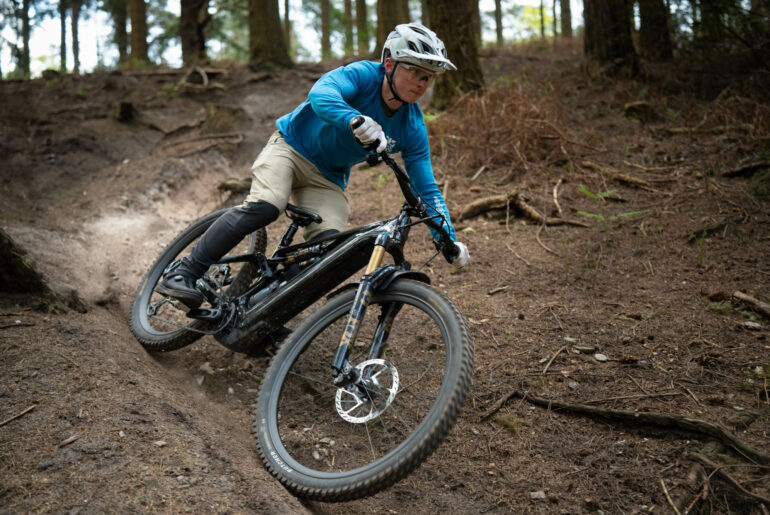
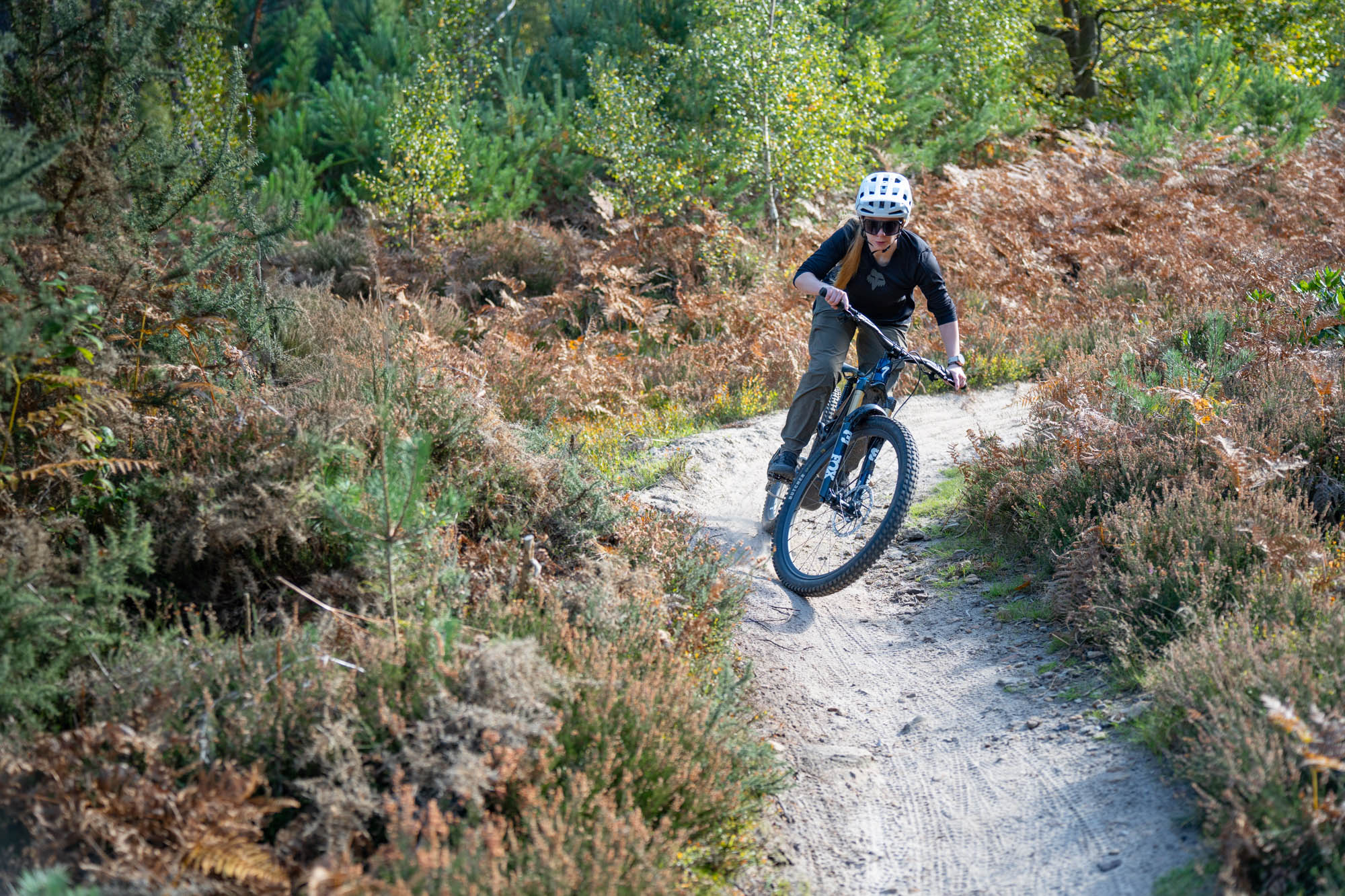
Hi, Queenie here. Check out my long-term Specialized Levo 4 Pro review below! I dive into the details about the motor, suspension, components and more and give my honest thoughts after riding the bike for the last year.
Contents:
- Intro
- Specialized Turbo Levo 4 Pro Motor System
- Geometry
- Suspension (Fox – 3 tokens in forks. Genie shock thoughts. Pressures.)
- Groupset
- Brakes
- Wheels and tyres
- Finishing Kit
- Final Thoughts
Introduction
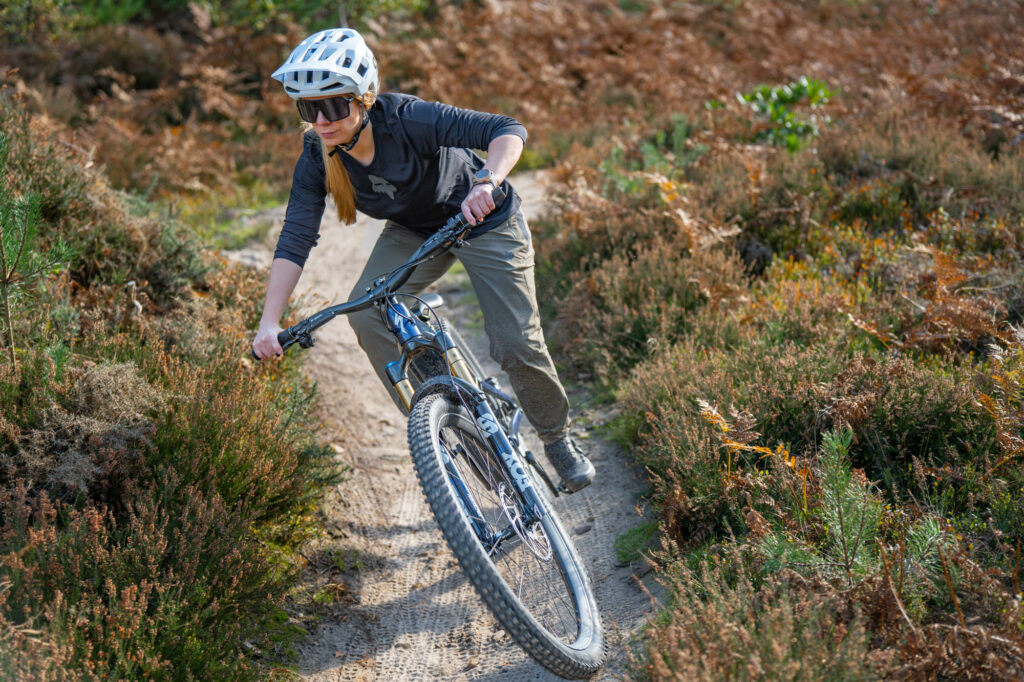
I got my first e-MTB back in 2018, and have been lucky enough to try several since. Without a shadow of a doubt, my favourite up until last year was the 3rd Generation Levo. Everything about it was just spot on for me – from the motor system to the size and geometry. So naturally, I was super excited to hear that a new generation Levo was on its way!
Specialized Turbo Levo 4 Motor System
I feel like any good e-bike review should start with some discussion around the motor system, particularly when it’s a step up from previous generations.
The Turbo Levo 4 features Specialized’s latest generation, full-power 3.1 Motor. If you’re on an S-Works model, you’ll be spoiled with 111Nm torque and 666w of power (or 850w since the recent over-the-air update), but the 105Nm of torque on the Pro spec and below is more than enough to shuttle you up even the steepest hill.
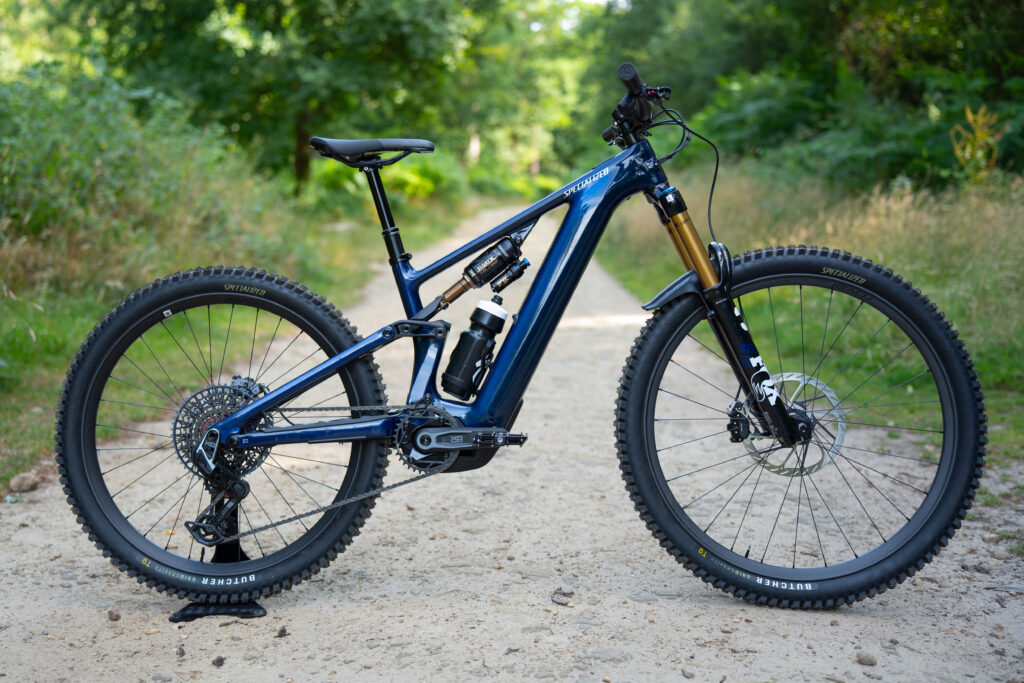
Alongside the motor system, the bike is supplied with a sizeable 840Wh battery. I’m on the smaller side at 5”3/63kg so I do benefit from getting more range out of an e-bike battery than many of my friends.
That said, when I first got the bike I (foolishly, given the massive power increase), didn’t realise that the increase in battery capacity vs previous model doesn’t completely offset the huge increase in power. When my partner and I both had a Gen 3 Levo, my battery was lasting significantly longer – when I got the Levo 4 and had all the settings at max (and he was still on the Gen 3), I was finding that the battery was draining at a similar speed to his. Which is logical, when you think about it – the bike has had a big increase in power and torque.
When we go out with our friends, especially in summer, most rides tend to be a “ride until your battery is flat” kind of affair. And selfishly, I like the feeling of safety that my battery lasting longer than everyone else’s provides. Pedalling a full-power, fairly long-travel e-MTB any further than a few hundred metres without the battery is never fun. I get battery anxiety, ok?
It goes a little bit against the grain given the great e-MTB power arms race thats happening in 2026, but I made my way into the Specialized App to fiddle with a few settings and bring the output of the bike back down to around what it would be in the Gen 3. Which then brought my range back to that sweet spot. In a ride during the summer where most of the uphills were completed in Turbo (the highest assist mode), I could easily get 5,000 metres of elevation out of the bike. If I were more conservative with the power, I’m sure I could get 7,000+, but I’m usually a bit pushed for time and the preference is to get the maximum amount of descending in as little time as possible.
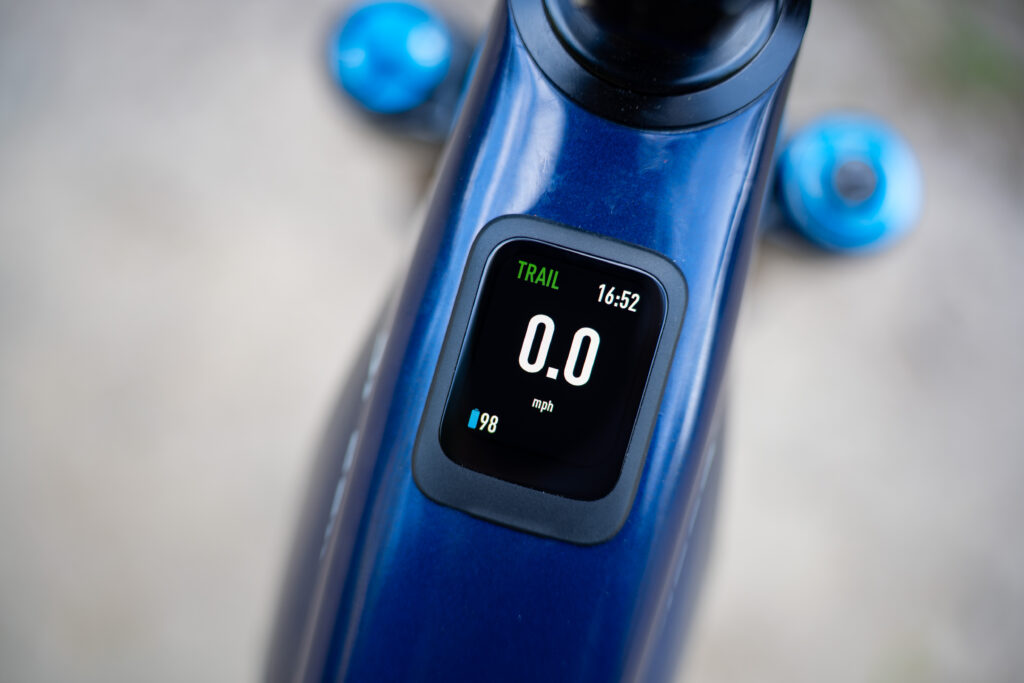
Ultimately, if you ride any bike in turbo mode a lot, particularly one with this much power, it’s going to drain the battery quicker than if you’re more conservative with the assistance. But the system’s adjustability means you can tweak the settings to work for your preferences – if you want to smash out some hot laps in full power turbo, you absolutely can (and you’ll have the BEST time). If you want to make sure you can make it to the end of a long ride with plenty of battery, it’s easy to make that happen too.
If you want to be a bit more clever with your battery usage, then dynamic microtune might be the setting for you. Rather than using the standard eco/trail/turbo settings, dynamic microtune allows you to increase support in 10% increments, meaning you can cruise at a lower output, but when you pedal hard, the bike will give you 100% power.
The other thing I love about the 3.1 motor is the refinement of the “overrun” feature. Overrun allows the motor to continue providing torque for a short while after you stop pedalling. The 3.1 motor offers a smoother transition and more precise power delivery. This is particularly noticeable on technical climbs, where the overrun allows you to get straight back on the pedals once you’ve made it past a feature.
On previous e-bikes, when the terrain got technical, I would find myself with the occasional dead spot as I waited for the power to kick in, which at times caused me to stall. While I’ll openly admit there is likely some rider error involved too (a good workwoman never blames her tools), it is noticeably easier to navigate the same terrain with the 3.1 motor.
The intensity of the overrun feature can also be adjusted to suit a rider’s preference – some find that it can take some getting used to.
I’ll admit, I was a little sceptical of how exactly Specialized were going to improve an already incredible motor (the previous generation was already a huge step up from anything else I’d ridden long term), but they have absolutely levelled it up.
Levo 4 Geometry
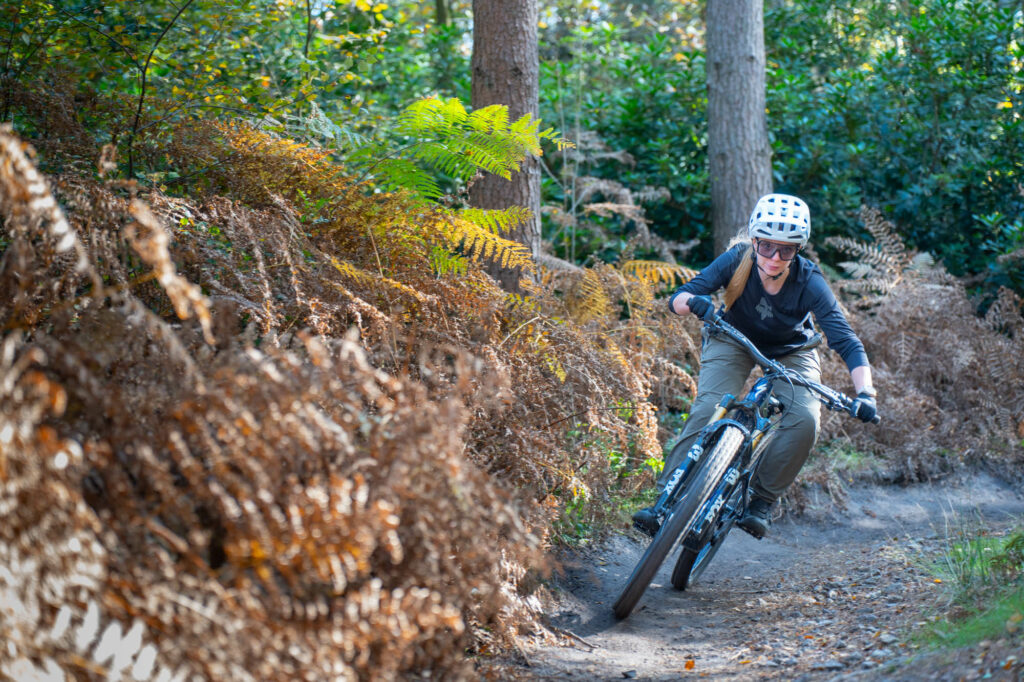
For a long time I was convinced that a longer bike was better, and I probably spent more time than I should have riding bikes that were actually too big for me. Yes, a longer bike can offer improved straight-line stability, but at what cost? Although I absolutely can ride a medium bike (my first e-bike had a 445mm reach, with an absolutely monster wheelbase), it wasn’t until I moved over to the previous generation Levo that I decided to rein things back in a bit.
At 5ft3, the Levo 4’s 435 reach on the S2 size feels spot on. I had to make some componentry tweaks (that I’ll discuss later on) to make both seated and standing pedalling feel closer to what I’m used to, but the geometry as a whole doesn’t feel like it could be more perfect.
A real bugbear of mine is when smaller bikes can’t accommodate the full length of a dropper post (potentially rendering the lower seat height useless), and I’m pleased to say that this isn’t the case on an S2 Levo. The S2 features a 390mm seat tube length, allowing a post to insert all the way in.
One thing to note, is that the Levo 4 S2 arrived with a 125mm dropper post, whereas the previous generation came with a 150mm post. This did mean I had to run the seatpost further out of the seat tube than on my previous bike, which took some getting used to but hasn’t caused any issues since.
The Levo 4 features a 6-way adjustable geometry system. This allows you to fine-tune your setup to your individual preferences. Adjust your head angle, bottom bracket height and chainstay length to suit. For me, I prefer to run the bike in the more trail-focused settings. This means the bike feels more nimble and manoeuvrable on our mellower local trails. If I was spending an extended period of time in Wales or further afield, then I might consider switching the head angle to the slacker setting etc.
Suspension
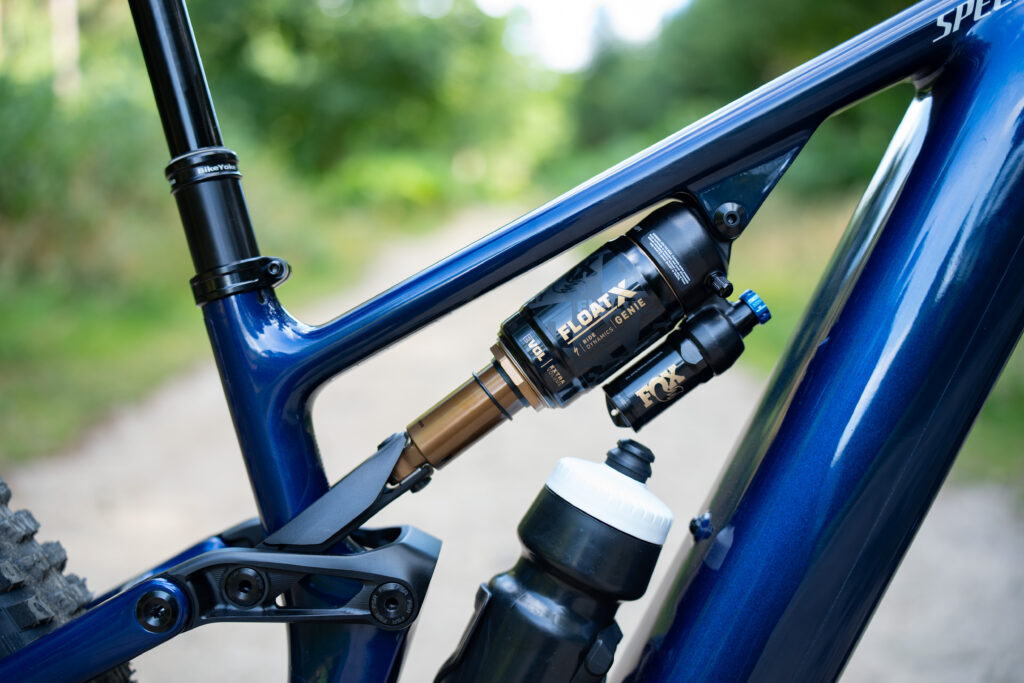
The Levo Pro comes equipped with Fox Factory 38 Forks, and Specialized’s own GENIE version of the Fox Float X Factory. I’ve run Fox for the majority of the time I’ve had mountain bikes, so it’s a system I’m very familiar with and feel confident works for me.
However, initially I struggled to get the forks feeling right out of the box. Despite settings being where they should be, they still felt quite harsh. It was only after opening them up that I discovered they had come with 3 volume spacers installed from Fox. I definitely don’t need 3 spacers. In all honesty, I don’t need any at all. My weight and riding style don’t require them (as uncool as it may sound, I’m not much of a big hitter). Once the spacers were removed, the forks felt buttery smooth. I run between around 87 and 90PSI in the forks.
The GENIE shock was something new and exciting for the Levo 4. GENIE uses a dual air spring system across 2 connected air chambers that creates a flatter spring curve for the initial 70% of the shock’s stroke. During the final 30% of the stroke, the outer chamber closes automatically, which decreases air volume and increases the progressive nature of the spring rate to soak up big impacts and avoid bottom-outs.
Essentially, GENIE was designed to feel more like a coil shock, while having the adjustability of an air shock. I do believe it lives up to the hype – it’s very plush off the top, and the small bump sensitivity is fantastic. The first 70% of the travel provides a coil-like feel, and the last 30% provides an air-like ramp-up.
If you really want to run a coil, or an alternative air shock, then you’ll be pleased to know the Levo 4 is compatible with any 210x55mm aftermarket shock. But the GENIE is pretty special, so at least give it a go.
Groupset
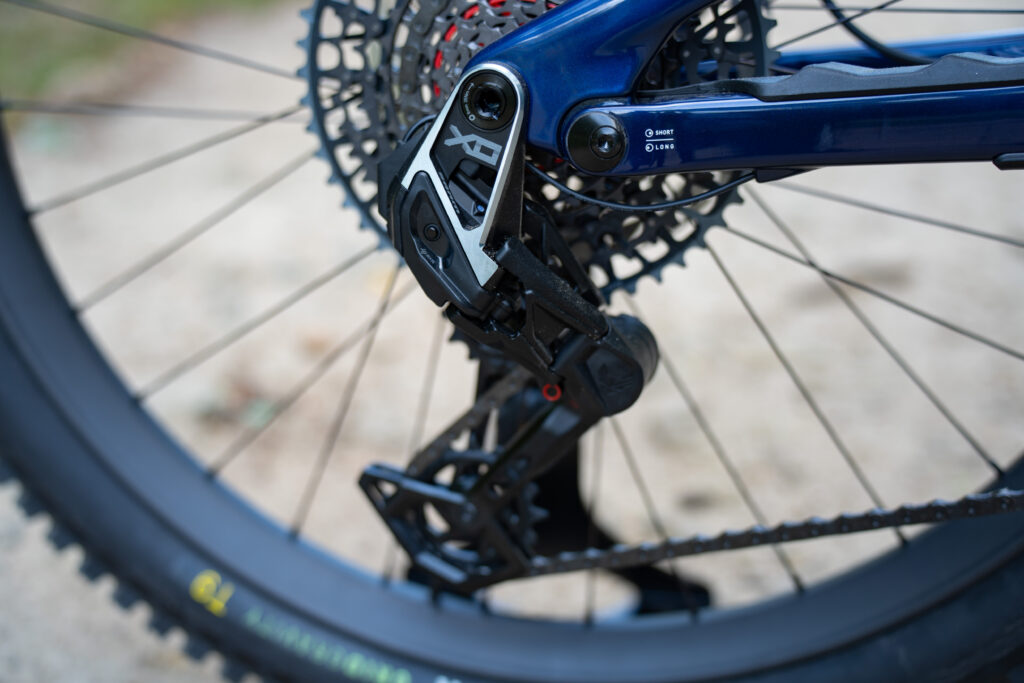
Jumping on the Levo 4 was the first time I’d experienced using electric gears. The Pro spec bike comes fitted with a SRAM XO Eagle T-Type AXS Groupset that offers buttery smooth shifting.
The other benefit of T-Type is its durability. I’ve had a few offs and meetings with the local foliage, and the rear derailleur has taken it all like a champ. Fitting the groupset aftermarket isn’t cheap, but you can replace the derailleur cage, meaning unless something completely catastrophic happens, you’ll be able to keep your mech running for a long time.
Whether one *needs* electronic shifting remains to be seen, but there are definite benefits that can’t be ignored. Flawless performance under load, no more cable stretch and minimal maintenance certainly float my boat. And with most new high-end bikes coming equipped with electric groupsets, it feels like it’s time to embrace it!
Brakes
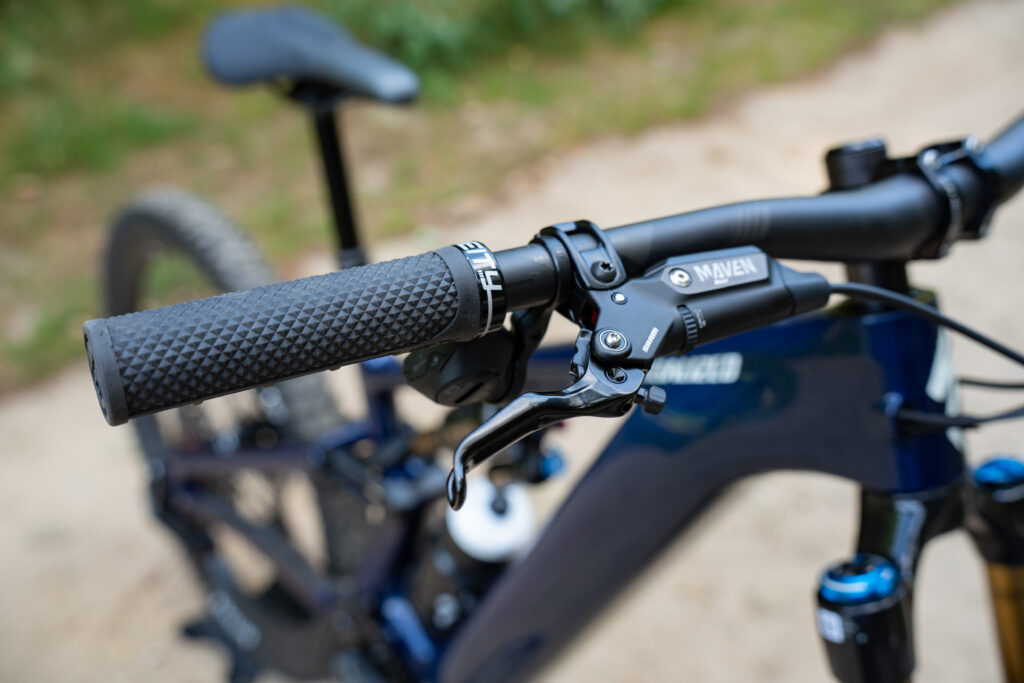
SRAM Mavens are the brake of the moment, and with good reason. Their stopping power is unmatched – to the point I nearly shot myself out the front door on the first ride because I wasn’t used to them. The previous Levo featured SRAM Code RSC’s, which I got along with well. I felt they had plenty of modulation but enough bite to keep you out of trouble. The Maven’s take stopping power to new heights. It did take me a couple of rides to get used to them, but I was soon feeling right at home.
SRAM have since released an upgraded Lever Tuning kit, so if you do feel the Mavens don’t match your preferences out of the box, you can upgrade your levers, giving you more predictable power delivery and lighter engagement.
Wheels & Tyres
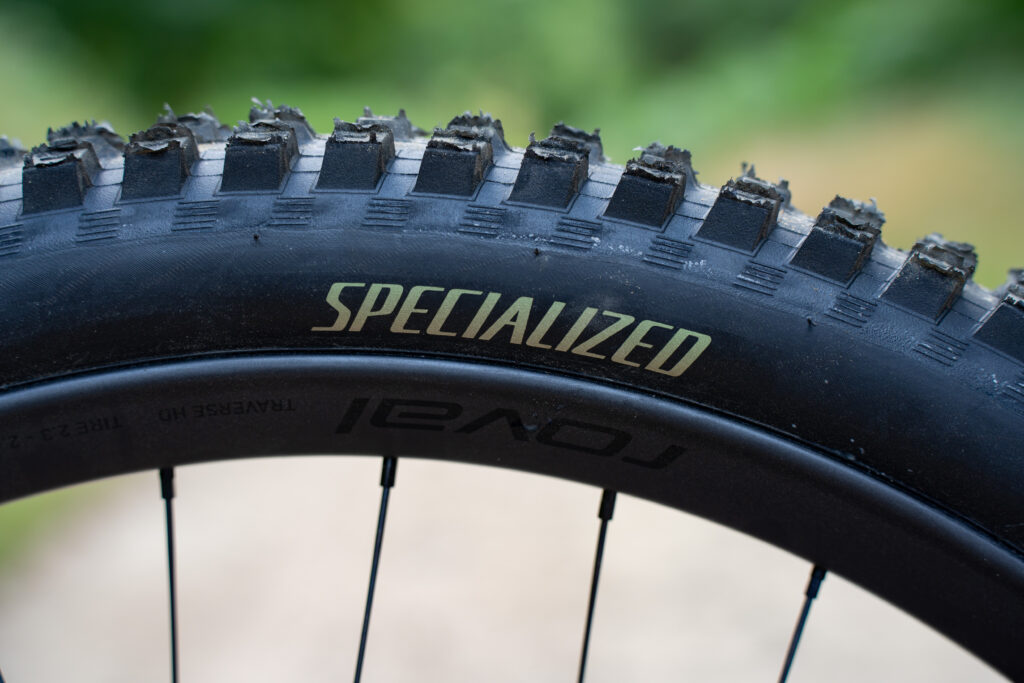
The Pro model is specced with Roval Traverse HD hookless carbon wheels that utilise DT Swiss 350 hubs. The Traverse HD 350 is Roval’s strongest wheelset yet, designed to tackle much more than I can throw at it, and I’ve found them to be incredibly robust. Being carbon, it’s a stiff wheelset that provides plenty of grip and precision at speed.
Teamed with Butcher GRID GRAVITY tyres front and rear, this combo provided me with an incredible amount of grip in a wide range of conditions – from loamy singletrack to wet mud, the Butchers can handle it all. I’d still lean towards a Hillbilly on the front for when conditions get really wild, purely for the deeper tread, but the Butcher is a really solid choice year-round.
Finishing Kit
The S2 Turbo Levo 4 changed a few things vs the previous model that meant I had to have a play with my setup to get the bike feeling like I needed it to.
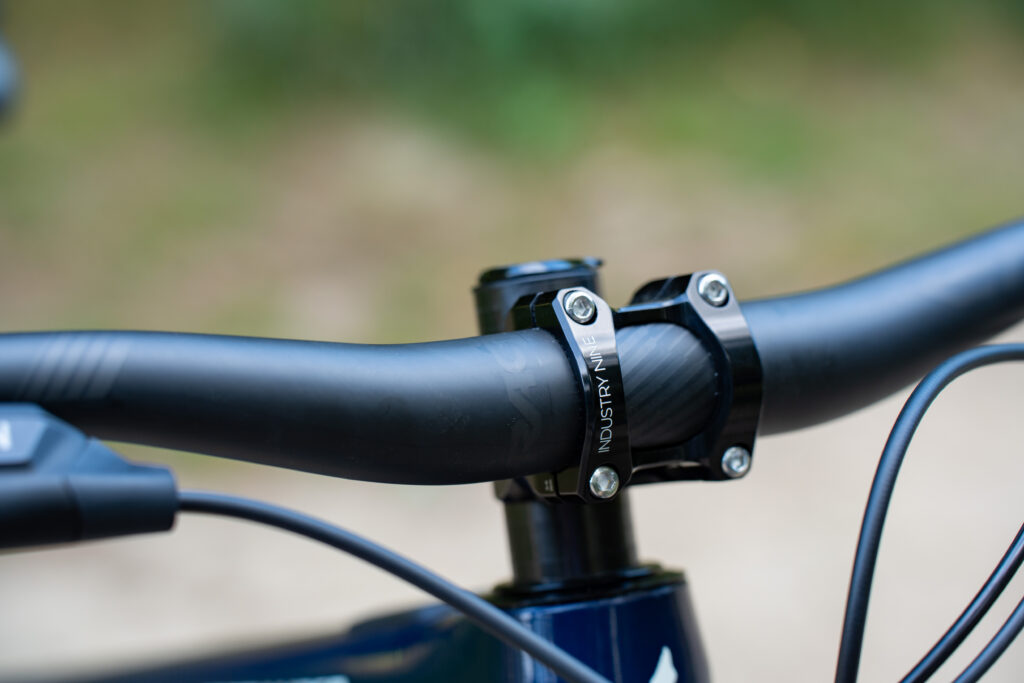
On my previous Levo the cockpit was made up of a 35mm stem, and a 30mm rise bar. The Levo 4 came equipped with a 40mm stem and 20mm rise bars, which made the front end of the bike feel much further away. It’s worth noting this won’t be an issue for everyone; bike fit is highly individualised, and I’m quite sensitive to changes, particularly when the geometry is largely the same. A simple swap out to a 35mm stem and 40mm bars gave me the adjustment I needed to get the bike feeling spot on.
I also mentioned the seatpost previously – on my last bike I had a 150mm dropper post, slammed right into the seat tube. The 125mm Bike Yoke Revive Max 3.0 on the Levo 4 means I have to run it higher out of the seat tube to get the correct seated position, which again took some getting used to. But now feels completely familiar. If you absolutely must have a longer seat post, the seat tube has ample space to swap it out.
Specialized Turbo Levo 4 Pro – Final Thoughts
The Gen 3 Turbo Levo was my favourite bike of all time. Not just favourite e-bike, because ultimately the motor should be secondary to how the bike rides and feels as a complete package. So I wondered how the Levo 4 could possibly be any better. But the clever folk at Specialized know what they’re doing, and the Levo 4 has exceeded expectations.
The geometry still suits me perfectly, and the bike as a whole just works. That said, I do need to give a shout-out to the motor system – as I mentioned earlier, it’s noticeably levelled up and allowed me to tackle terrain with confidence that would previously have proven quite tricky.
If you’re looking for your first e-MTB, or to upgrade from an older model, then the Specialized Turbo Levo 4 should be on the top of your list. It’s the whole package – great motor system, big battery and above all else a fantastic bike to ride, e-MTB or not.